
Imagine arriving at work tomorrow only to discover your computers won’t start, your internet is down, or a ransomware attack has locked every file your business depends on. How quickly could you continue serving customers?
That’s where business continuity comes in.
Business continuity isn’t just an IT buzzword. It’s a practical strategy that helps your business keep operating during unexpected disruptions. Whether it’s a cyberattack, hardware failure, severe weather, or human error, a business continuity plan reduces downtime and helps your company recover faster.
For small businesses, it can mean the difference between a minor inconvenience and a major financial loss.
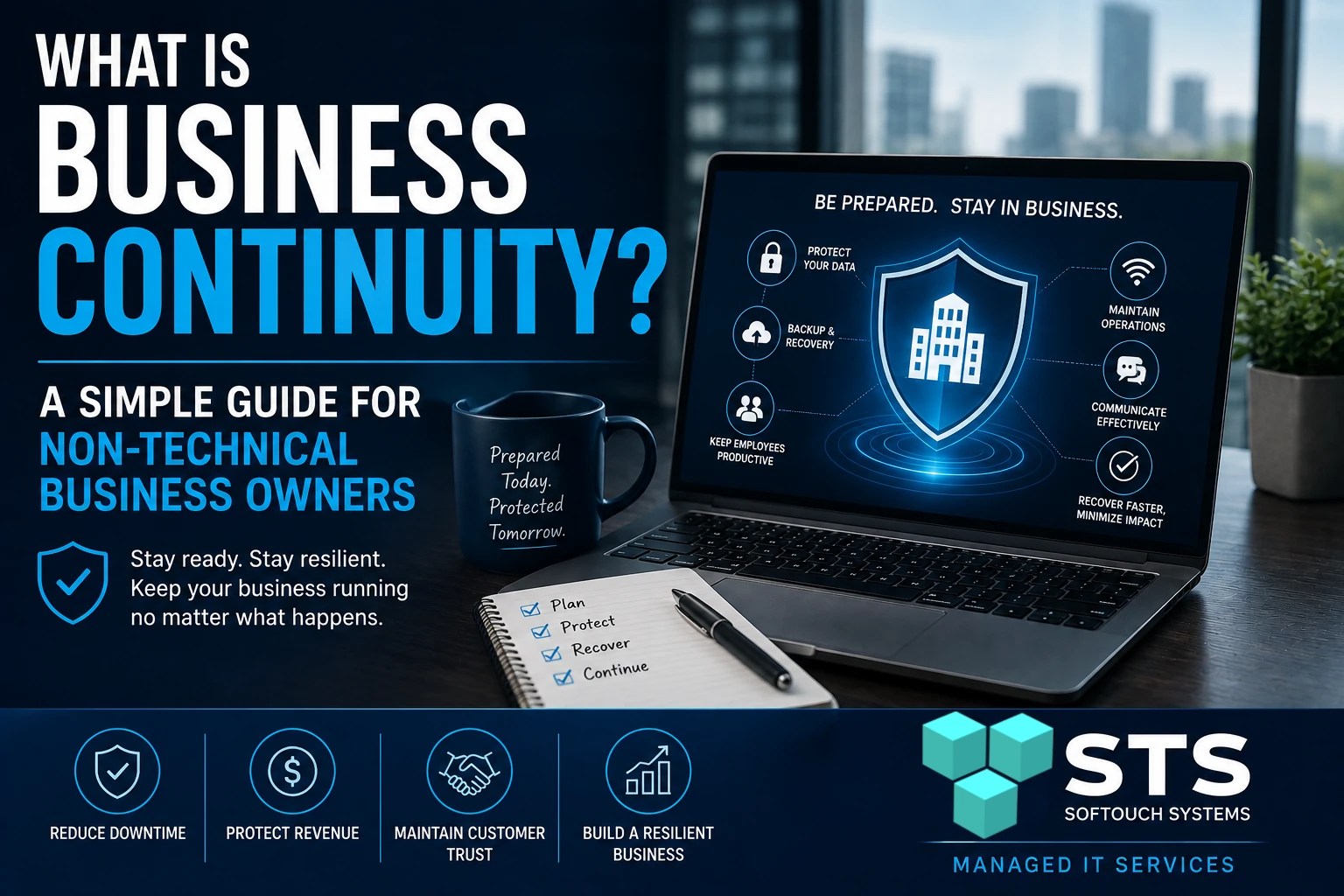
What Is Business Continuity?
Business continuity is your organization’s ability to continue operating during and after an unexpected event.
Rather than asking, “How do we fix the problem?” business continuity asks, “How do we keep the business running while we fix the problem?”
A continuity plan identifies your most important business functions and outlines how employees, technology, and processes will continue to work if something goes wrong.
Business Continuity vs. Disaster Recovery
These two terms are often confused, but they are not the same.
Business Continuity focuses on keeping your business operational during a disruption.
Disaster Recovery focuses on restoring damaged systems, data, and technology after the event.
Think of it this way:
- Business Continuity keeps your business moving.
- Disaster Recovery gets your technology back to normal.
A successful business needs both.
Why Small Businesses Need Business Continuity
Many owners assume continuity planning is only necessary for large corporations.
In reality, small businesses often face greater risks because they have fewer resources to recover from unexpected events.
Common disruptions include:
- Cyberattacks and ransomware
- Power outages
- Internet service failures
- Hardware failures
- Employee mistakes
- Natural disasters
- Lost or stolen devices
Without a plan, even a single day of downtime can result in lost sales, frustrated customers, and damaged reputation.
What Does a Business Continuity Plan Include?
A good plan doesn’t need to be hundreds of pages long.
It should answer practical questions such as:
- Which business systems are critical?
- How long can each system be unavailable?
- Where are important files backed up?
- Who is responsible during an emergency?
- How will employees communicate if normal systems fail?
- What temporary workarounds are available?
The goal is to make recovery predictable instead of chaotic.
Technology Is Only One Piece
Many people think business continuity is simply backing up files.
Backups are essential, but they are only part of the solution.
A complete continuity strategy also includes:
- Reliable cybersecurity protection
- Regular software updates
- Secure cloud services
- Tested backup recovery
- Multi-factor authentication
- Documented procedures
- Employee security awareness
- Ongoing system monitoring
Each layer helps reduce the likelihood of a disruption and shortens recovery time when problems occur.
How Managed IT Services Support Business Continuity
Maintaining business continuity requires ongoing attention—not just a one-time plan.
That’s where Managed IT Services provide real value.
A managed IT provider continuously monitors your systems, installs security updates, verifies backups, identifies vulnerabilities, and responds quickly when issues arise.
Instead of reacting after something breaks, your business benefits from proactive maintenance designed to prevent disruptions before they happen.
For many small businesses, this level of support is more affordable than hiring internal IT staff while providing access to experienced professionals and enterprise-grade tools.
Don’t Wait for an Emergency
Every business will experience unexpected disruptions at some point. The difference is how prepared they are when it happens.
Business continuity isn’t about expecting the worst. It’s about making sure your business can continue serving customers, protecting data, and generating revenue regardless of the challenge.
FAQ
Business continuity is the ability of a business to continue operating during and after unexpected disruptions such as cyberattacks, equipment failures, or natural disasters.
Yes. Small businesses often have fewer resources to recover from downtime, making business continuity planning even more important.
Most plans include critical business processes, backup procedures, emergency contacts, communication plans, recovery priorities, and responsibilities for key personnel.
Managed IT Services help maintain secure systems, monitor network health, verify backups, install updates, respond to incidents, and reduce the risk of unexpected downtime.
Let SofTouch Systems Help You Prepare
At SofTouch Systems, our Managed IT Services help small businesses reduce downtime, strengthen cybersecurity, and build practical business continuity strategies that fit their needs and budget.
If you’re unsure how prepared your business really is, contact STS today for a free 15 minute Business Continuity Check-up. We’ll help you identify risks, improve resilience, and keep your business running when it matters most.
Discover more from SofTouch Systems
Subscribe to get the latest posts sent to your email.